Angelica seed pack
For best results, angelica seed should be exposed to cold, moist conditions prior to sowing. This can either be done by sowing outdoors in the autumn, or by mixing it with moist sand and keeping it in a sealed bag in the fridge for a month prior to sowing in the spring. Either way, sow the seeds on the surface and gently press into the soil; don’t fully cover the seeds as they require some light to germinate.
Being a biennial, it will only grow to its full height and produce flowers in the second year. If it is left to produce seed, it will die after the second year (but is a prolific self-seeder so tends to hang around). You can prolong the life of the plant by cutting off the seed heads before they are mature.
All parts of the plant can be harvested, but it is the root that is most commonly used by herbalists and should be harvested in the autumn of its first year of growth.
More Images
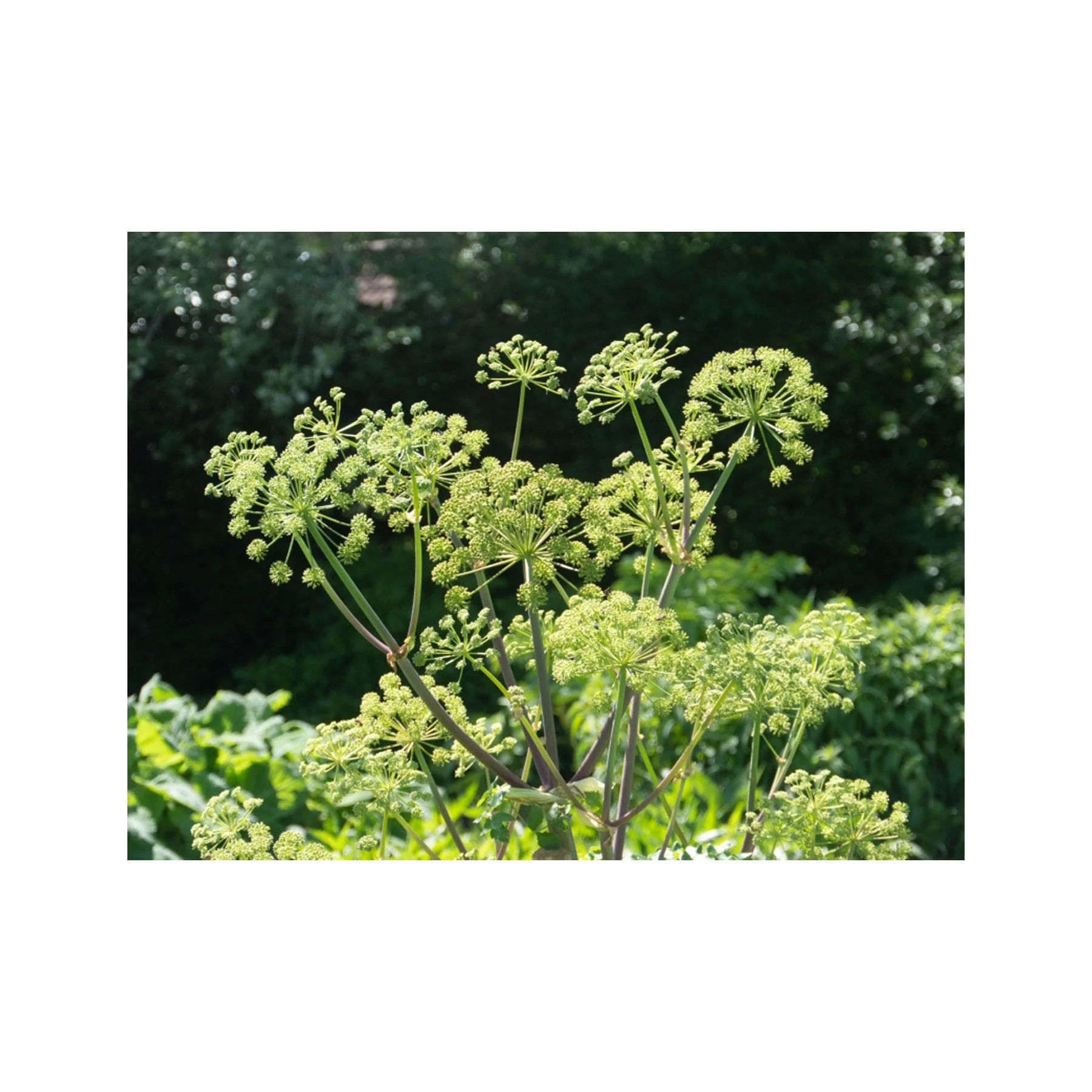

Angelica seed pack
For best results, angelica seed should be exposed to cold, moist conditions prior to sowing. This can either be done by sowing outdoors in the autumn, or by mixing it with moist sand and keeping it in a sealed bag in the fridge for a month prior to sowing in the spring. Either way, sow the seeds on the surface and gently press into the soil; don’t fully cover the seeds as they require some light to germinate.
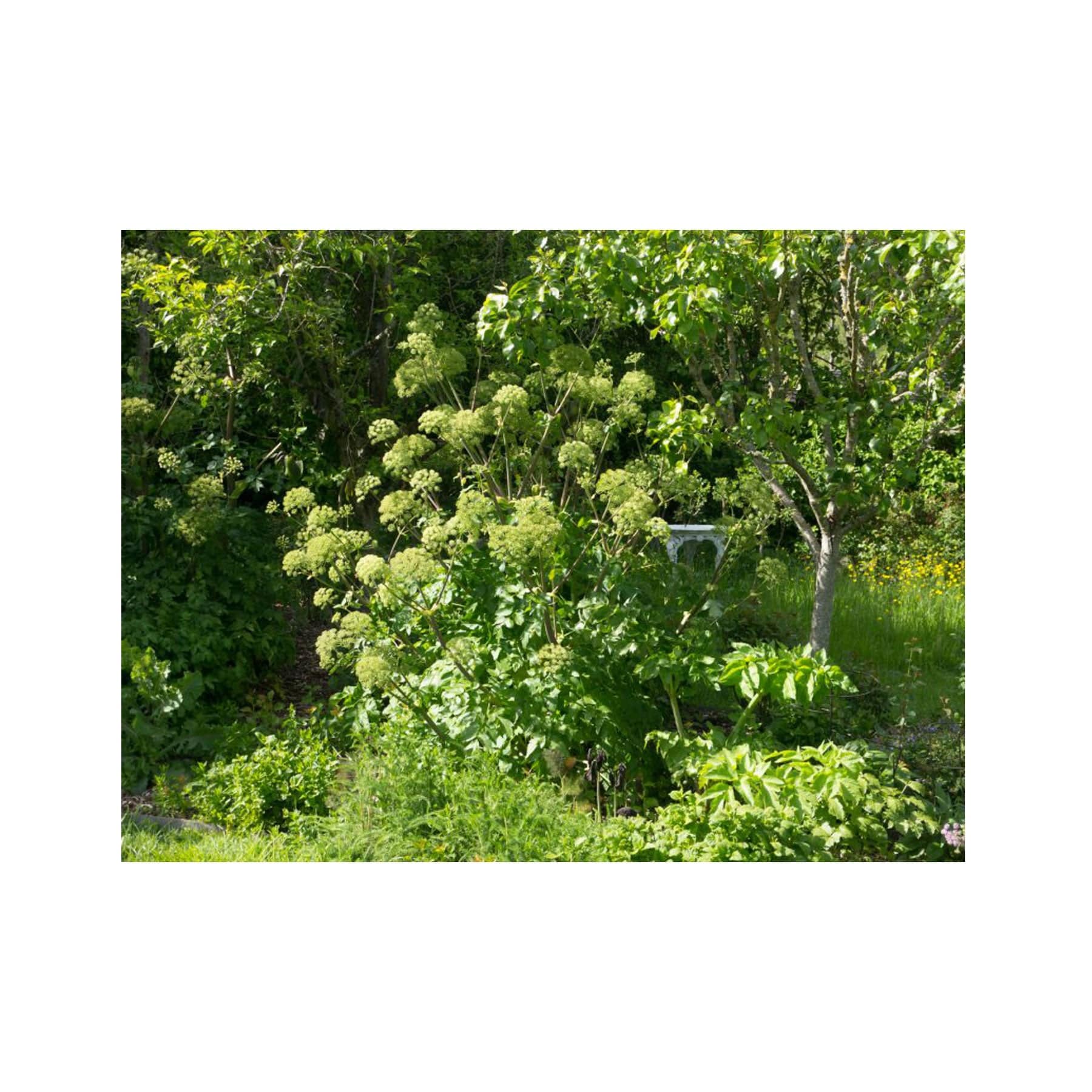
Being a biennial, it will only grow to its full height and produce flowers in the second year. If it is left to produce seed, it will die after the second year (but is a prolific self-seeder so tends to hang around). You can prolong the life of the plant by cutting off the seed heads before they are mature.
All parts of the plant can be harvested, but it is the root that is most commonly used by herbalists and should be harvested in the autumn of its first year of growth.
Product Information
Product Information
Shipping & Returns
Shipping & Returns
Description
For best results, angelica seed should be exposed to cold, moist conditions prior to sowing. This can either be done by sowing outdoors in the autumn, or by mixing it with moist sand and keeping it in a sealed bag in the fridge for a month prior to sowing in the spring. Either way, sow the seeds on the surface and gently press into the soil; don’t fully cover the seeds as they require some light to germinate.
Being a biennial, it will only grow to its full height and produce flowers in the second year. If it is left to produce seed, it will die after the second year (but is a prolific self-seeder so tends to hang around). You can prolong the life of the plant by cutting off the seed heads before they are mature.
All parts of the plant can be harvested, but it is the root that is most commonly used by herbalists and should be harvested in the autumn of its first year of growth.