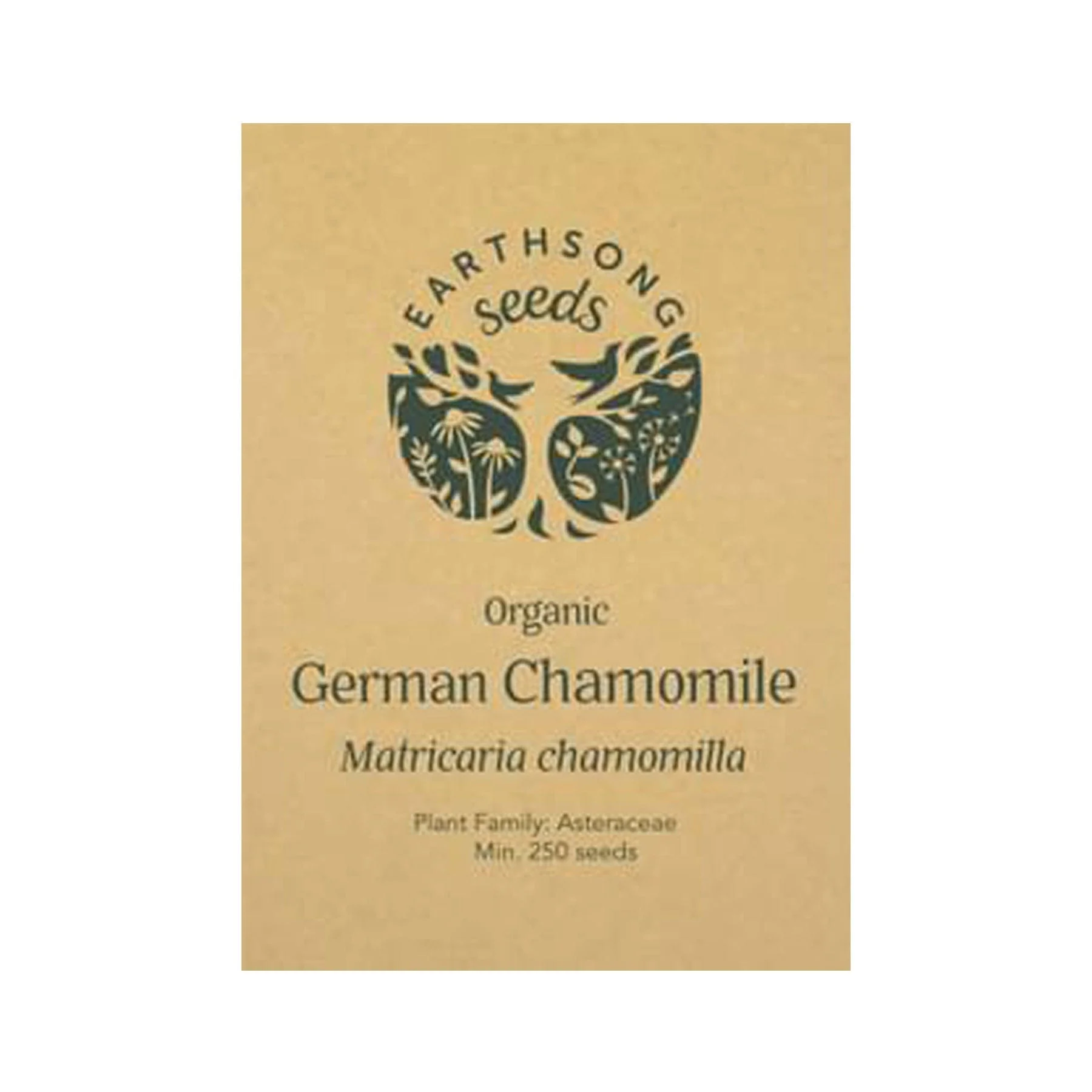
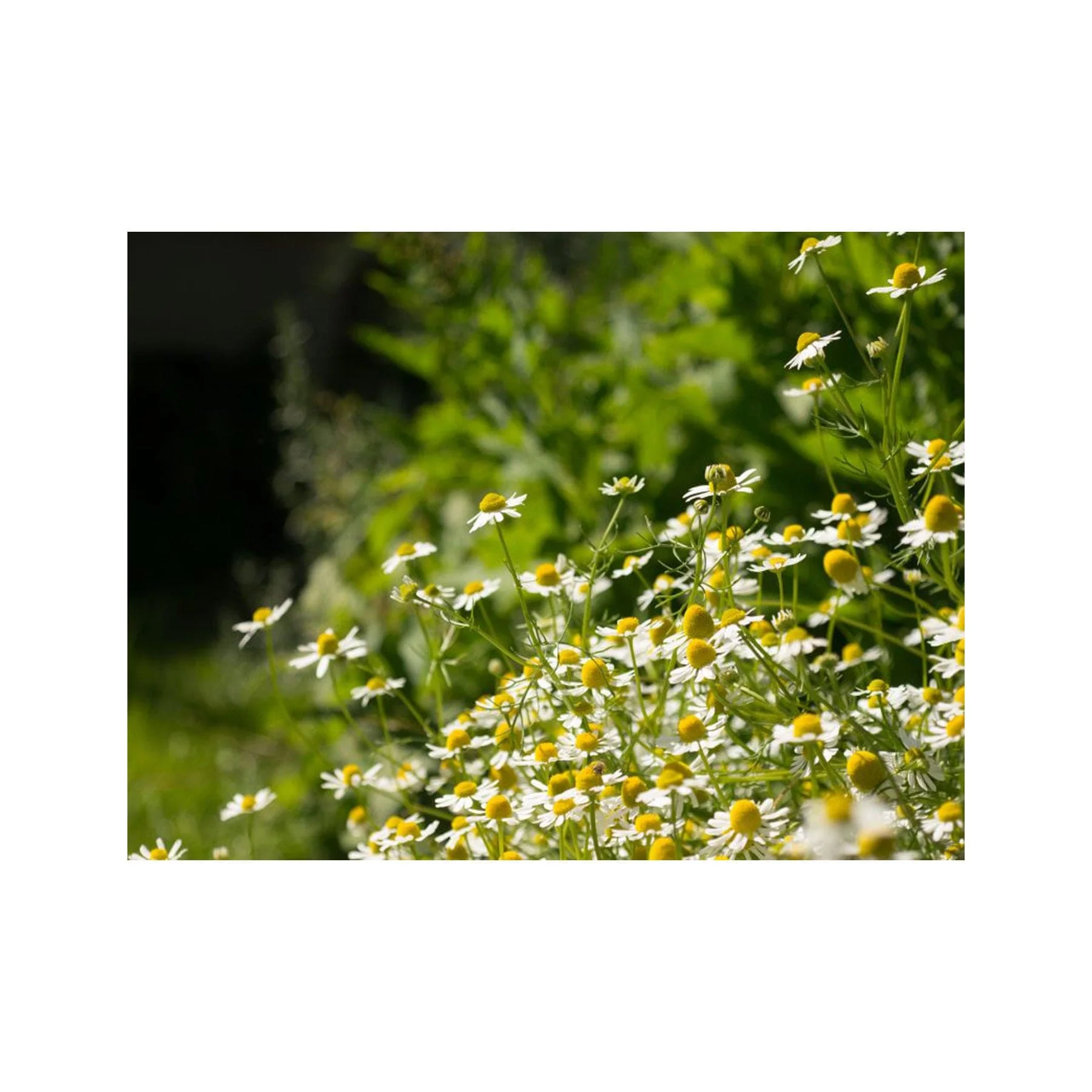
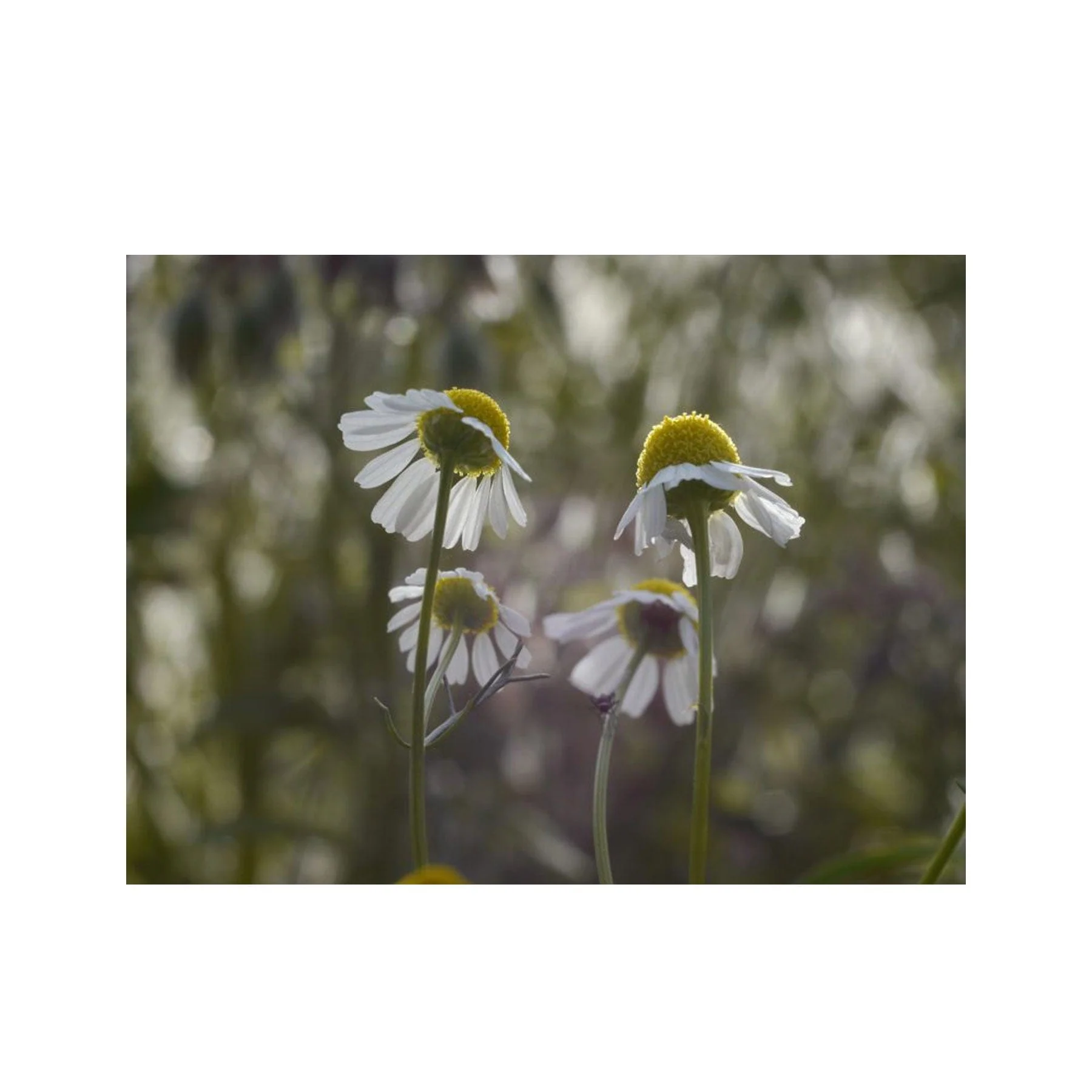
Chamomile German seed pack
Chamomile seed can be sown from early spring onwards. If you want to get started early you can sow in pots or trays indoors and transplant them out, or you can wait a bit and sow the seed directly into its final growing position. The seed germinates best in cool soils, so keep an eye on the increasingly unpredictable spring weather and move your trays to cooler locations if necessary.
The tiny seed requires light to germinate so make sure you sow it on the surface and gently press into the soil – don’t cover it. Water the seeds and keep moist until they germinate, which normally takes between 1-2 weeks.
Uses and benefits:
The essential oil that gives chamomile flowers their characteristic aroma and flavour contains sesquiterpenes and other constituents with a range of anti-inflammatory properties. On contact with hot steam or water, one of these, matricin, further generates a distinctive, blue volatile oil (chamazulene) that also has these properties. Chamomile also contains flavonoids including apigenin which is a particularly strong anti-inflammatory for the skin. These constituents have a particular effect on mucosal surfaces of the digestive system when swallowed, and on the airways when inhaled with steam. Chamomile has also demonstrated wound healing properties.
Original: $2.95
-70%$2.95
$0.89More Images

Chamomile German seed pack
Chamomile seed can be sown from early spring onwards. If you want to get started early you can sow in pots or trays indoors and transplant them out, or you can wait a bit and sow the seed directly into its final growing position. The seed germinates best in cool soils, so keep an eye on the increasingly unpredictable spring weather and move your trays to cooler locations if necessary.
The tiny seed requires light to germinate so make sure you sow it on the surface and gently press into the soil – don’t cover it. Water the seeds and keep moist until they germinate, which normally takes between 1-2 weeks.
Uses and benefits:
The essential oil that gives chamomile flowers their characteristic aroma and flavour contains sesquiterpenes and other constituents with a range of anti-inflammatory properties. On contact with hot steam or water, one of these, matricin, further generates a distinctive, blue volatile oil (chamazulene) that also has these properties. Chamomile also contains flavonoids including apigenin which is a particularly strong anti-inflammatory for the skin. These constituents have a particular effect on mucosal surfaces of the digestive system when swallowed, and on the airways when inhaled with steam. Chamomile has also demonstrated wound healing properties.
Product Information
Product Information
Shipping & Returns
Shipping & Returns
Description
Chamomile seed can be sown from early spring onwards. If you want to get started early you can sow in pots or trays indoors and transplant them out, or you can wait a bit and sow the seed directly into its final growing position. The seed germinates best in cool soils, so keep an eye on the increasingly unpredictable spring weather and move your trays to cooler locations if necessary.
The tiny seed requires light to germinate so make sure you sow it on the surface and gently press into the soil – don’t cover it. Water the seeds and keep moist until they germinate, which normally takes between 1-2 weeks.
Uses and benefits:
The essential oil that gives chamomile flowers their characteristic aroma and flavour contains sesquiterpenes and other constituents with a range of anti-inflammatory properties. On contact with hot steam or water, one of these, matricin, further generates a distinctive, blue volatile oil (chamazulene) that also has these properties. Chamomile also contains flavonoids including apigenin which is a particularly strong anti-inflammatory for the skin. These constituents have a particular effect on mucosal surfaces of the digestive system when swallowed, and on the airways when inhaled with steam. Chamomile has also demonstrated wound healing properties.