Eco bee nester
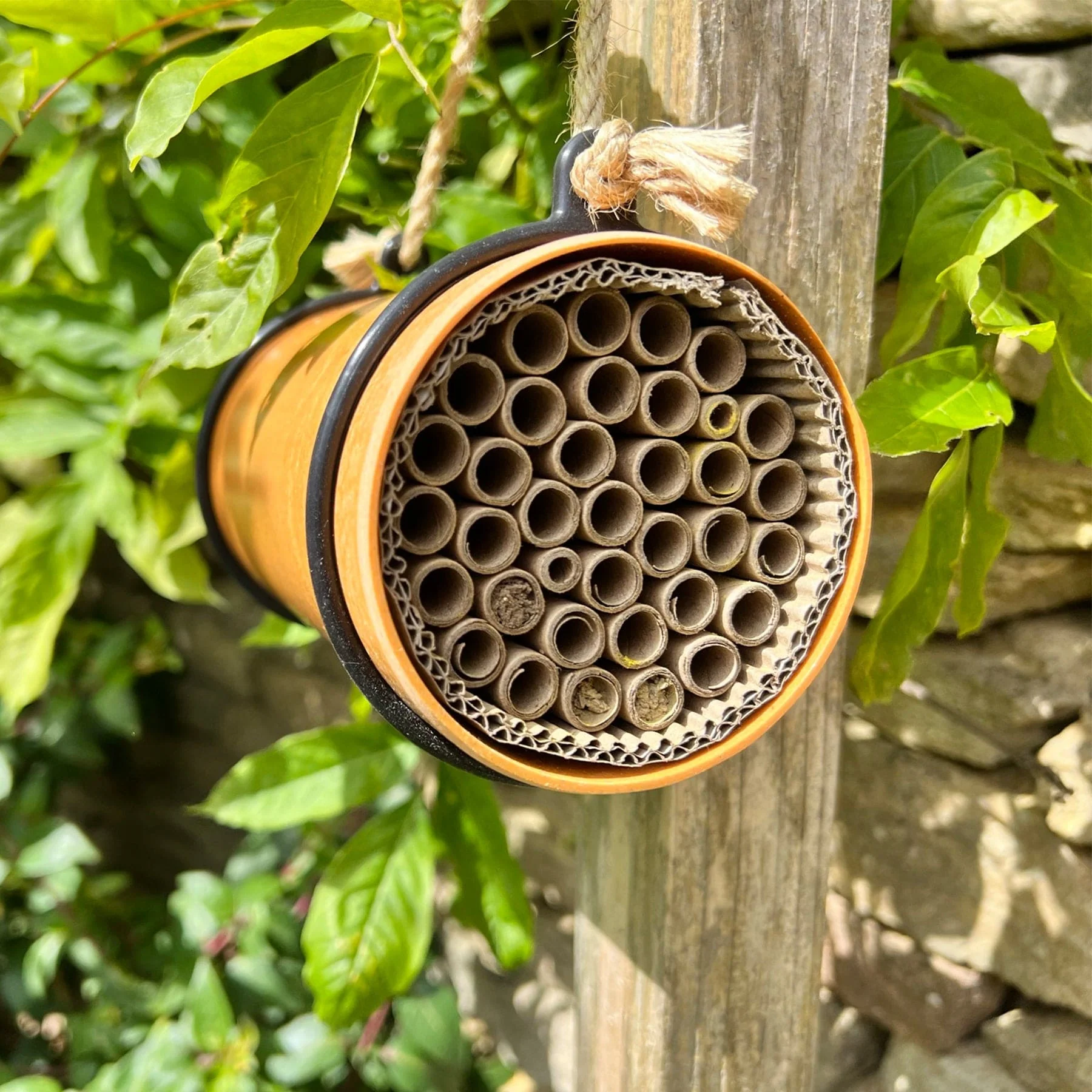
We have around 270 species of bee in Britain, including the honey bee and bumblebees. Just under 250 of these species are actually solitary bees and come in all shapes and sizes. The bee nester is made for mason bees and leaf cutter bees, who will use the tubes to lay their eggs each spring and summer, closing up the tubes with either mud or leaves. What's unique about this bee nester? It’s designed and made from natural, environmentally friendly materials, making it kind to nature and for nature. The eco nester is formed from natural plant fibres with almost zero waste pollution during production. Once it reaches the end of its life, it can even be degraded into fertiliser.
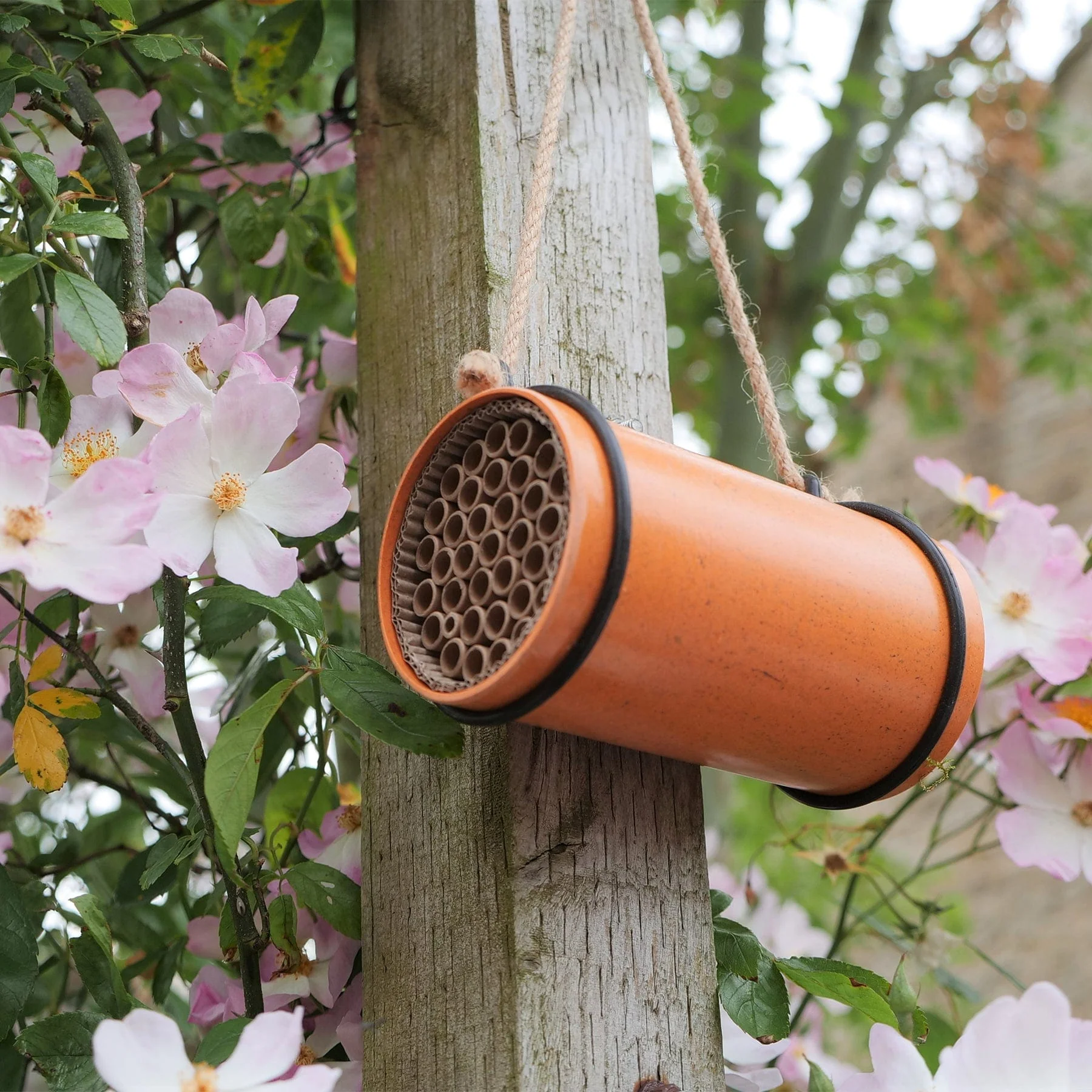
The pretty colour blends into flower patches and gardens, and the rustic hanging string is durable and long-lasting. The internal nesting tubes can be replaced yearly, making this a long-term investment for your local bees.
Siting
Your new bee nester should be hung anywhere between ground level and two metres in height. The bees need a clear pathway to the tubes, so try not to nestle it into too much vegetation. But it is a good idea to plant some nectar-rich flowers and plants nearby to feed the bees. Keep the nester in a sheltered spot, away from prevailing winds and rain. Ideally, you want the front of the nester facing the morning sunshine so that it warms up through the day. You can also angle it slightly downwards to prevent rainwater from trickling inside. As autumn approaches and solitary bee numbers reduce, you can fit the front guard on to act as a predator guard to stop woodpeckers from taking the eggs.
Size: 9.5cm x 9.5cm x 16cm
More Images


Eco bee nester
We have around 270 species of bee in Britain, including the honey bee and bumblebees. Just under 250 of these species are actually solitary bees and come in all shapes and sizes. The bee nester is made for mason bees and leaf cutter bees, who will use the tubes to lay their eggs each spring and summer, closing up the tubes with either mud or leaves. What's unique about this bee nester? It’s designed and made from natural, environmentally friendly materials, making it kind to nature and for nature. The eco nester is formed from natural plant fibres with almost zero waste pollution during production. Once it reaches the end of its life, it can even be degraded into fertiliser.
The pretty colour blends into flower patches and gardens, and the rustic hanging string is durable and long-lasting. The internal nesting tubes can be replaced yearly, making this a long-term investment for your local bees.
Siting
Your new bee nester should be hung anywhere between ground level and two metres in height. The bees need a clear pathway to the tubes, so try not to nestle it into too much vegetation. But it is a good idea to plant some nectar-rich flowers and plants nearby to feed the bees. Keep the nester in a sheltered spot, away from prevailing winds and rain. Ideally, you want the front of the nester facing the morning sunshine so that it warms up through the day. You can also angle it slightly downwards to prevent rainwater from trickling inside. As autumn approaches and solitary bee numbers reduce, you can fit the front guard on to act as a predator guard to stop woodpeckers from taking the eggs.
Size: 9.5cm x 9.5cm x 16cm
Product Information
Product Information
Shipping & Returns
Shipping & Returns
Description
We have around 270 species of bee in Britain, including the honey bee and bumblebees. Just under 250 of these species are actually solitary bees and come in all shapes and sizes. The bee nester is made for mason bees and leaf cutter bees, who will use the tubes to lay their eggs each spring and summer, closing up the tubes with either mud or leaves. What's unique about this bee nester? It’s designed and made from natural, environmentally friendly materials, making it kind to nature and for nature. The eco nester is formed from natural plant fibres with almost zero waste pollution during production. Once it reaches the end of its life, it can even be degraded into fertiliser.
The pretty colour blends into flower patches and gardens, and the rustic hanging string is durable and long-lasting. The internal nesting tubes can be replaced yearly, making this a long-term investment for your local bees.
Siting
Your new bee nester should be hung anywhere between ground level and two metres in height. The bees need a clear pathway to the tubes, so try not to nestle it into too much vegetation. But it is a good idea to plant some nectar-rich flowers and plants nearby to feed the bees. Keep the nester in a sheltered spot, away from prevailing winds and rain. Ideally, you want the front of the nester facing the morning sunshine so that it warms up through the day. You can also angle it slightly downwards to prevent rainwater from trickling inside. As autumn approaches and solitary bee numbers reduce, you can fit the front guard on to act as a predator guard to stop woodpeckers from taking the eggs.
Size: 9.5cm x 9.5cm x 16cm