Motherwort seed pack
Sowing and growing:
Motherwort seed germinates best when it has been exposed to cold, moist conditions for at least a few weeks prior to sowing (a process known as stratification). You can also sow the seed directly outdoors in the autumn. Either way, sow on the surface and gently press into the soil; do not cover as the seeds require some light for germination (which normally takes around 2-3 weeks).
If planting indoors, transplant into pots and grow on until they are around 6 inches tall before planting out. Provide a spacing of around 30cm between plants.
Motherwort prefers full sunshine but can also be grown in partial shade. It is a resilient plant that can tolerate heavy frosts, dry conditions and poor soils. That said, it does respond well to being grown in compost-enriched soils and will produce higher yields if watered during dry spells in the summer.
Uses and benefits:
Motherwort is associated with calming anxiety symptoms, especially those felt in the chest. The key to understanding this reputation is to see it as the herbal accompaniment to a good breathing exercise and with a focus on reducing tension in the diaphragm. This large muscle is our breathing bellows, and should move smoothly and expansively with each breath. So think of this herb as a tea if you are prone to heart palpitations, hyperventilation, hiatus hernia and swallowing difficulties, if any of these seem to have anxiety as an origin.
In women, motherwort is classed as a uterine tonic and can help regulate the menstrual cycle, again especially where this has been influenced by anxiety and/or tension. Similarly, it can relax excess tension and stress during the menopause.
Harvest:
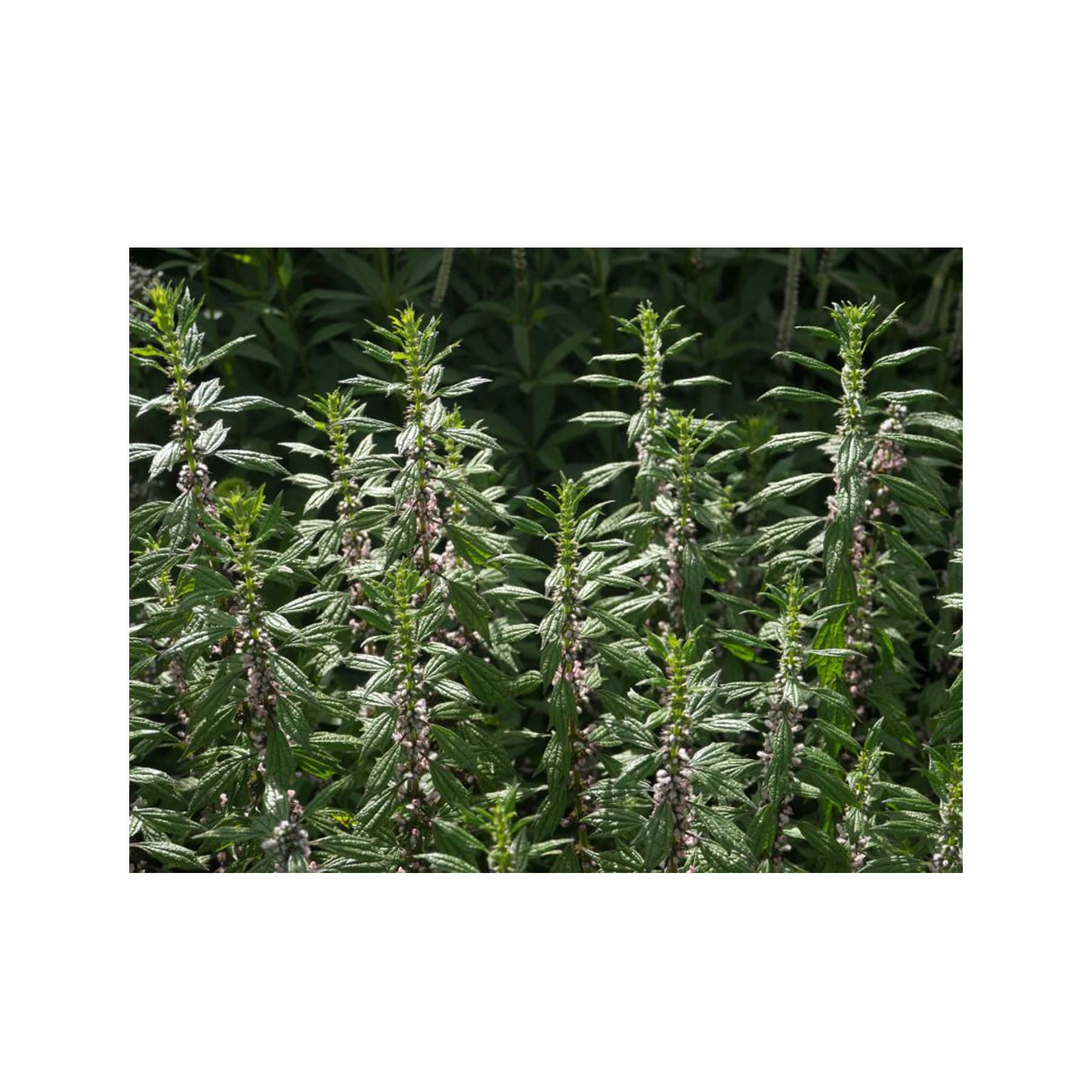
Harvest motherwort just as she comes into flower. This has the dual benefit of gathering the aerial parts when they are at their best, and also prevents it self-seeding everywhere. Due to its strong flavour motherwort is best used as part of a blend in a tea or as a tincture. The immediate impact in taking motherwort tea is its bitterness which soon turns into an acrid pungency – so blend with fennel or chamomile or honey to balance this out.
More Images


Motherwort seed pack
Sowing and growing:
Motherwort seed germinates best when it has been exposed to cold, moist conditions for at least a few weeks prior to sowing (a process known as stratification). You can also sow the seed directly outdoors in the autumn. Either way, sow on the surface and gently press into the soil; do not cover as the seeds require some light for germination (which normally takes around 2-3 weeks).
If planting indoors, transplant into pots and grow on until they are around 6 inches tall before planting out. Provide a spacing of around 30cm between plants.
Motherwort prefers full sunshine but can also be grown in partial shade. It is a resilient plant that can tolerate heavy frosts, dry conditions and poor soils. That said, it does respond well to being grown in compost-enriched soils and will produce higher yields if watered during dry spells in the summer.
Uses and benefits:
Motherwort is associated with calming anxiety symptoms, especially those felt in the chest. The key to understanding this reputation is to see it as the herbal accompaniment to a good breathing exercise and with a focus on reducing tension in the diaphragm. This large muscle is our breathing bellows, and should move smoothly and expansively with each breath. So think of this herb as a tea if you are prone to heart palpitations, hyperventilation, hiatus hernia and swallowing difficulties, if any of these seem to have anxiety as an origin.
In women, motherwort is classed as a uterine tonic and can help regulate the menstrual cycle, again especially where this has been influenced by anxiety and/or tension. Similarly, it can relax excess tension and stress during the menopause.
Harvest:
Harvest motherwort just as she comes into flower. This has the dual benefit of gathering the aerial parts when they are at their best, and also prevents it self-seeding everywhere. Due to its strong flavour motherwort is best used as part of a blend in a tea or as a tincture. The immediate impact in taking motherwort tea is its bitterness which soon turns into an acrid pungency – so blend with fennel or chamomile or honey to balance this out.
Product Information
Product Information
Shipping & Returns
Shipping & Returns
Description
Sowing and growing:
Motherwort seed germinates best when it has been exposed to cold, moist conditions for at least a few weeks prior to sowing (a process known as stratification). You can also sow the seed directly outdoors in the autumn. Either way, sow on the surface and gently press into the soil; do not cover as the seeds require some light for germination (which normally takes around 2-3 weeks).
If planting indoors, transplant into pots and grow on until they are around 6 inches tall before planting out. Provide a spacing of around 30cm between plants.
Motherwort prefers full sunshine but can also be grown in partial shade. It is a resilient plant that can tolerate heavy frosts, dry conditions and poor soils. That said, it does respond well to being grown in compost-enriched soils and will produce higher yields if watered during dry spells in the summer.
Uses and benefits:
Motherwort is associated with calming anxiety symptoms, especially those felt in the chest. The key to understanding this reputation is to see it as the herbal accompaniment to a good breathing exercise and with a focus on reducing tension in the diaphragm. This large muscle is our breathing bellows, and should move smoothly and expansively with each breath. So think of this herb as a tea if you are prone to heart palpitations, hyperventilation, hiatus hernia and swallowing difficulties, if any of these seem to have anxiety as an origin.
In women, motherwort is classed as a uterine tonic and can help regulate the menstrual cycle, again especially where this has been influenced by anxiety and/or tension. Similarly, it can relax excess tension and stress during the menopause.
Harvest:
Harvest motherwort just as she comes into flower. This has the dual benefit of gathering the aerial parts when they are at their best, and also prevents it self-seeding everywhere. Due to its strong flavour motherwort is best used as part of a blend in a tea or as a tincture. The immediate impact in taking motherwort tea is its bitterness which soon turns into an acrid pungency – so blend with fennel or chamomile or honey to balance this out.