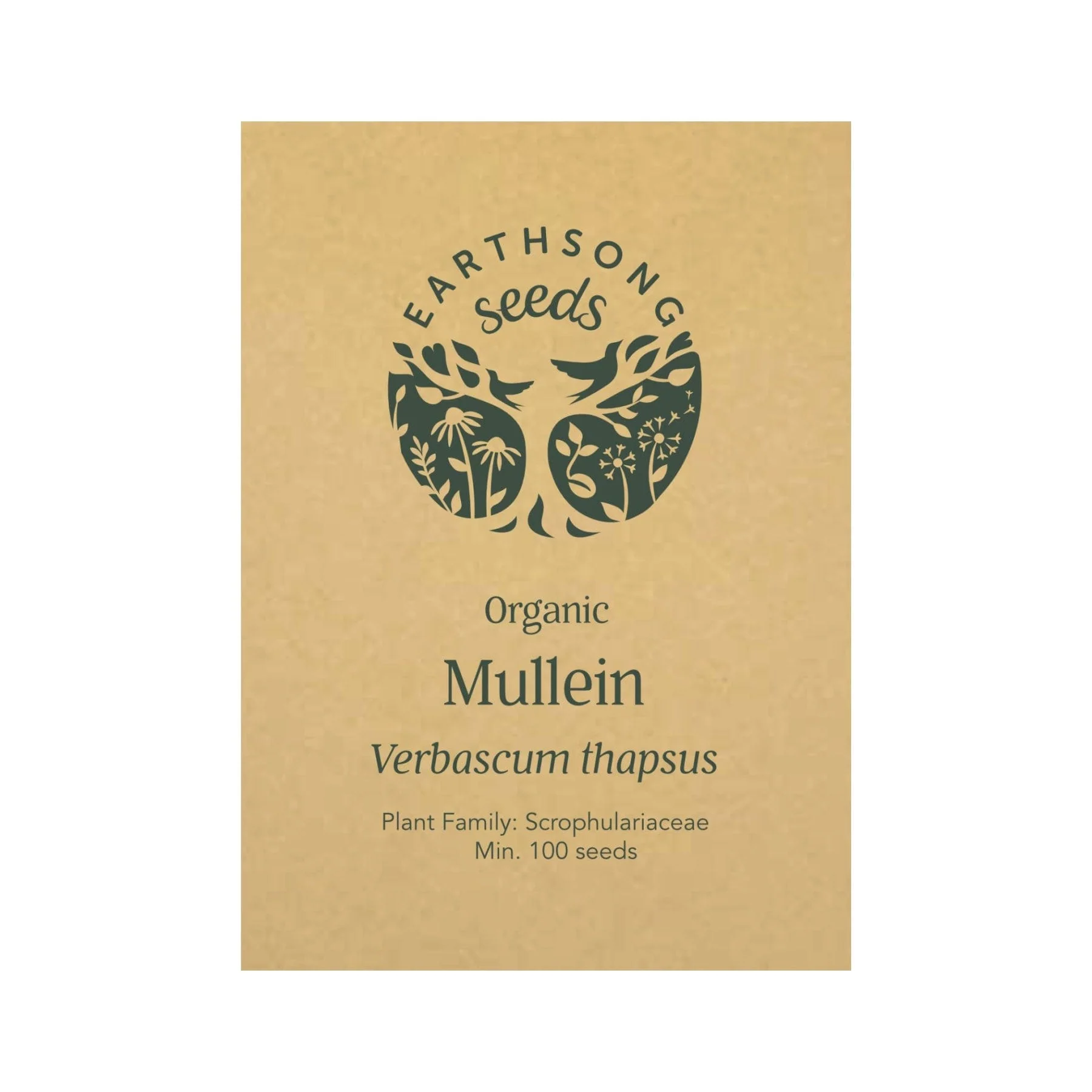
Mullein seed pack
Sowing and growing:
We recommend waiting until late spring to sow indoors or early summer if sowing outdoors. Or you can wait until late summer to get small plants established before the winter for early flowering the following year.
Sow more seeds than you think you’ll need to compensate for erratic germination. Scatter the seeds on the surface and gently press into the soil; do not cover with soil as the seeds require light to germinate. Keep the soil moist while you wait. Sometimes it takes a couple of weeks, and on rare occasions it can take up to a couple of months.
Uses and benefits:
Like many hirsute (hairy) plants, mullein’s leaves are used for nourishing the whole respiratory system. It’s softness seems to activate the cilia helping to remove congestion, whilst its demulcent nature moistens a dry, irritated cough. It soothes hardness and eases blockage. It contains some mucilage, saponins, tannins and flavonoids that all contribute by relaxing, counter-irritating, astringing and healing to its long-held use as an lung tonic expectorant.
Harvest:
Harvest the softest leaves from second-year plants, by picking them off individually early in the summer, before the flower spike appears – and before the eponymously named Mullein Moth caterpillar gets to it, leaving a wake of dust and detritus in its wake. As the leaves are so spongy and hygroscopic, its best to harvest towards the end of the day after any dew has evaporated. Either peg them with a clothes peg on a mullein-drying-line or lay the leaves out on a drying rack and dry at 40C overnight and store in an airtight container.
More Images
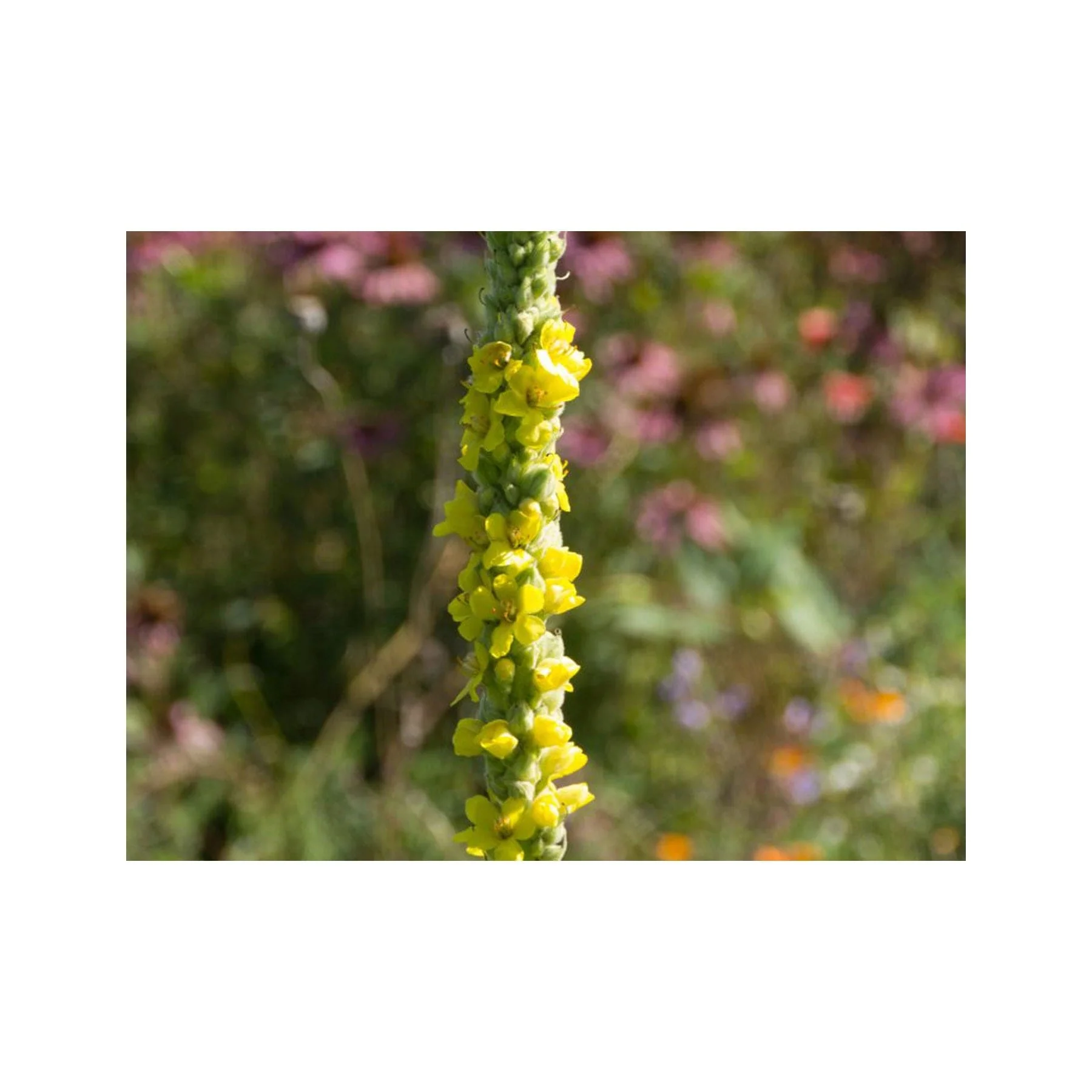
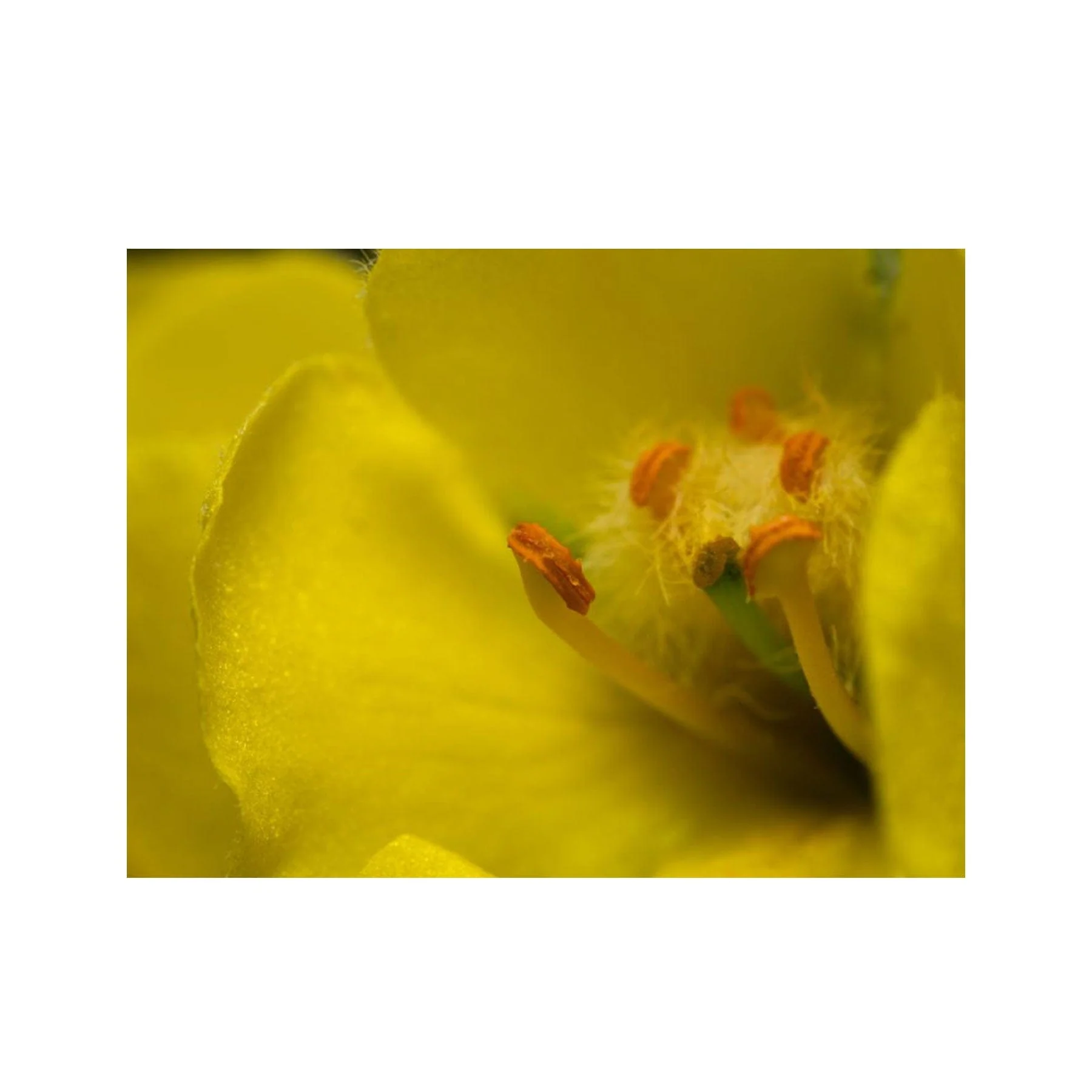
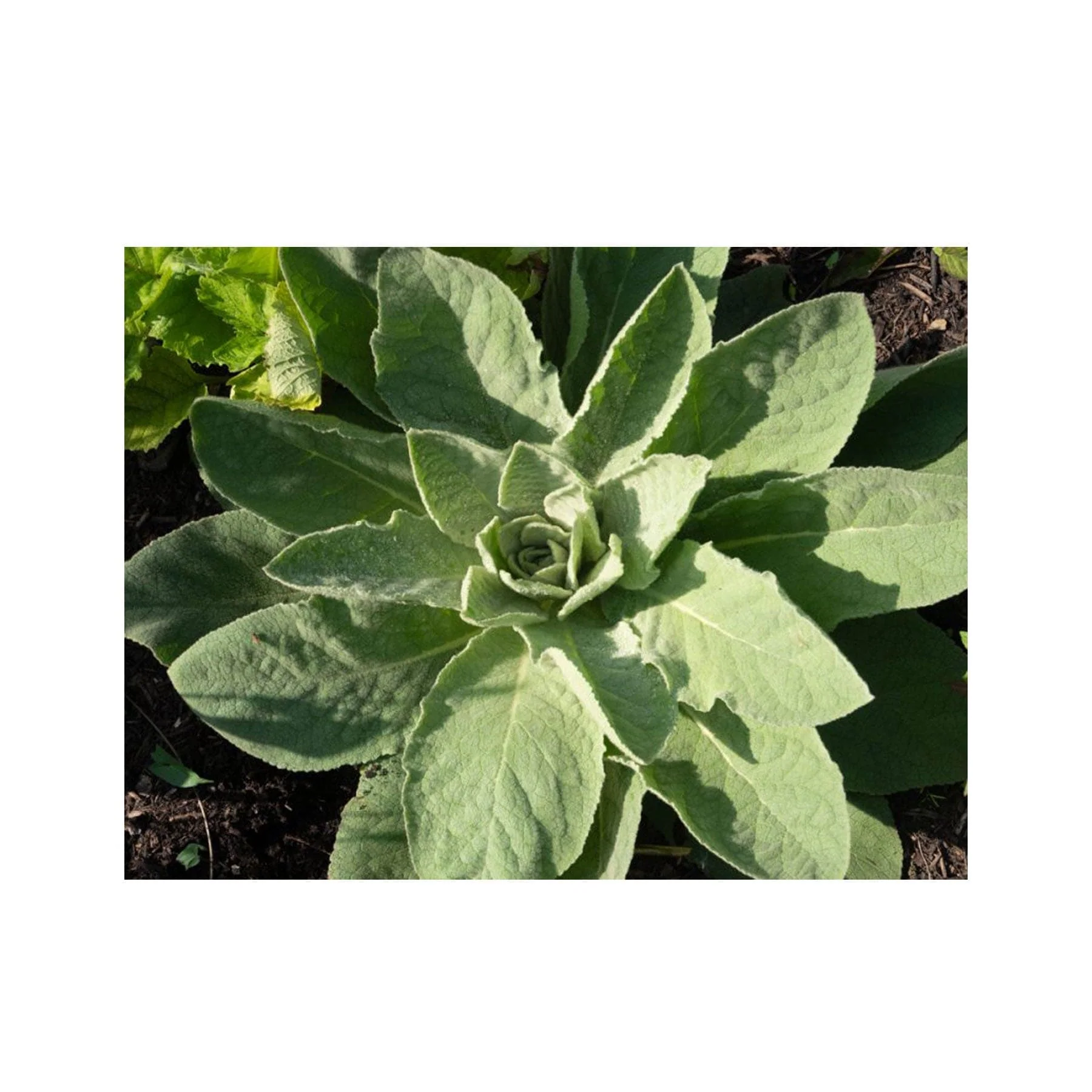
Mullein seed pack
Sowing and growing:
We recommend waiting until late spring to sow indoors or early summer if sowing outdoors. Or you can wait until late summer to get small plants established before the winter for early flowering the following year.
Sow more seeds than you think you’ll need to compensate for erratic germination. Scatter the seeds on the surface and gently press into the soil; do not cover with soil as the seeds require light to germinate. Keep the soil moist while you wait. Sometimes it takes a couple of weeks, and on rare occasions it can take up to a couple of months.
Uses and benefits:
Like many hirsute (hairy) plants, mullein’s leaves are used for nourishing the whole respiratory system. It’s softness seems to activate the cilia helping to remove congestion, whilst its demulcent nature moistens a dry, irritated cough. It soothes hardness and eases blockage. It contains some mucilage, saponins, tannins and flavonoids that all contribute by relaxing, counter-irritating, astringing and healing to its long-held use as an lung tonic expectorant.
Harvest:
Harvest the softest leaves from second-year plants, by picking them off individually early in the summer, before the flower spike appears – and before the eponymously named Mullein Moth caterpillar gets to it, leaving a wake of dust and detritus in its wake. As the leaves are so spongy and hygroscopic, its best to harvest towards the end of the day after any dew has evaporated. Either peg them with a clothes peg on a mullein-drying-line or lay the leaves out on a drying rack and dry at 40C overnight and store in an airtight container.
Product Information
Product Information
Shipping & Returns
Shipping & Returns
Description
Sowing and growing:
We recommend waiting until late spring to sow indoors or early summer if sowing outdoors. Or you can wait until late summer to get small plants established before the winter for early flowering the following year.
Sow more seeds than you think you’ll need to compensate for erratic germination. Scatter the seeds on the surface and gently press into the soil; do not cover with soil as the seeds require light to germinate. Keep the soil moist while you wait. Sometimes it takes a couple of weeks, and on rare occasions it can take up to a couple of months.
Uses and benefits:
Like many hirsute (hairy) plants, mullein’s leaves are used for nourishing the whole respiratory system. It’s softness seems to activate the cilia helping to remove congestion, whilst its demulcent nature moistens a dry, irritated cough. It soothes hardness and eases blockage. It contains some mucilage, saponins, tannins and flavonoids that all contribute by relaxing, counter-irritating, astringing and healing to its long-held use as an lung tonic expectorant.
Harvest:
Harvest the softest leaves from second-year plants, by picking them off individually early in the summer, before the flower spike appears – and before the eponymously named Mullein Moth caterpillar gets to it, leaving a wake of dust and detritus in its wake. As the leaves are so spongy and hygroscopic, its best to harvest towards the end of the day after any dew has evaporated. Either peg them with a clothes peg on a mullein-drying-line or lay the leaves out on a drying rack and dry at 40C overnight and store in an airtight container.